
Post-surgery Swelling Care
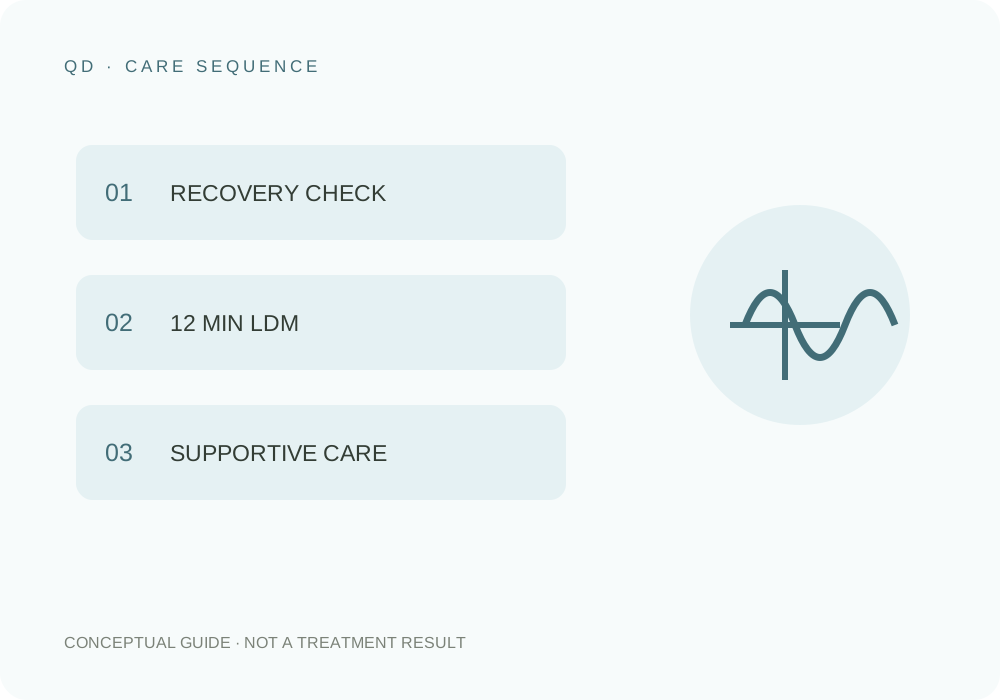
Post-surgery swelling care combines 12 minutes of LDM, sono or cryo care, LED, a sheet mask and assessment for a Cinderella IV infusion. We first review your operation, its date and the condition of the surgical area to decide which steps are appropriate.

Who it’s for
- People cleared by their surgeon to begin supportive skincare
- Those with residual puffiness alongside dry or uncomfortable skin
- People planning care between postoperative follow-up visits
A sudden increase in swelling on one side or worsening pain needs assessment by the surgical team before routine skincare.
How it works
Postoperative swelling changes with the operation and the body’s healing process. Ultrasound, surface cooling, light and moisturising steps are selected as supportive care. An infusion needs its own medical assessment. None of these steps guarantees a faster recovery or a particular surgical result.
THE MECHANISM, STEP BY STEP
01Identify the healing stage
Check wounds, sutures, bruising and altered sensation rather than relying on the date alone.
02Define contact limits
Mark areas where pressure or device contact must be avoided.
03Choose the device sequence
Plan 12 minutes of LDM and assess sono or cryo suitability.
04Review the infusion
Confirm the actual ingredients behind the Cinderella nickname and relevant medical history.
Treatment areas
- Skin near the operation
- Open wounds and incision lines are distinguished from areas cleared for contact.
- Residual swelling
- New asymmetry, warmth and pain change the priority of the visit.
What the procedure is like
- 1Review the surgical record, medicines and the surgeon’s care instructions.
- 2Plan LDM for 12 minutes with sono or cryo, LED and a sheet mask within the permitted area.
- 3Decide on the infusion separately and explain when to contact the surgical team.
The LDM step lasts 12 minutes. Assessment, other care and infusion observation add to the visit.
Recovery & aftercare
- Continue the surgeon’s instructions on washing, activity, compression and medication.
- Report increasing swelling; temporary irritation or bruising at an IV site may also need review.
What to expect over time
A general guide to how the days and months after treatment usually unfold. Results vary by individual.
Before arrival
Confirm when the surgeon permits skincare and which areas to avoid.
At the visit
Adjust contact and individual steps to the wound and skin response.
At follow-up
Compare actual swelling with recorded symptoms and similar-view photographs.
Sessions & results
The number of visits follows recovery. This program does not replace postoperative review or promise that swelling will disappear by a chosen date.
How it compares
A postoperative program includes a broader assessment and several components; a cryo add-on is a short cooling step.
| Comparison | Post-surgery Swelling Care | Cryo Soothing Add-on |
|---|---|---|
| Scope and purpose | Surgical-history review, LDM, device care, LED, mask and infusion assessment | Three minutes of device cooling added to existing care |
Safety & considerations
Possible reactions
- Temporary contact irritation or discomfort
- IV-site bruising, vein irritation or ingredient allergy
Review before care
- Operation date, sutures, implants and implanted threads
- Blood thinners, infusion reactions, heart or kidney conditions
Contact the surgical team promptly for fever, discharge, rapidly increasing asymmetry or worsening pain.
Your care at QD Clinic
Coordinate with the surgeon
Bring the permitted care instructions even if surgery was performed elsewhere.
Protect vulnerable areas
Reduced sensation and incisions require particular care with contact.
Track recovery
Record symptoms as well as photographs, using similar lighting and angles.
Frequently asked questions
Suture removal alone does not determine readiness. The wound, operation site and surgeon’s permission determine whether contact is appropriate or should wait. Even once care begins, devices and pressure are kept away from incision lines and open wounds, and only the surrounding skin your surgeon has cleared is treated.
Bring the operation name and date, the areas treated, any implant or thread information, your current medicines and the surgeon’s written precautions. Details of blood thinners, previous infusion reactions and any heart or kidney condition are needed to decide whether an infusion is suitable. If your surgeon asked you to avoid particular areas, please share that as well.
New or rapidly increasing asymmetry needs medical assessment first. Contact your surgeon rather than assuming it is routine postoperative puffiness. If warmth, worsening pain, fever or discharge accompany the swelling, the surgical team should review it before any skincare appointment.
An infusion is a separate medical decision. Its actual ingredients, suitability and alternatives should be discussed after reviewing your health and medication. If you decide against it, LDM, sono or cryo, LED and the sheet mask are still assessed on their own. Possible bruising or vein irritation at the needle site is also explained beforehand.
The listed component is sono or cryo. More intensity does not establish better recovery; the choice follows healing and sensation in the surgical area. Where sensation is reduced, discomfort is harder to notice, so contact strength is set with extra caution.
For international patients
Consultation in English / 中文 / 日本語 · WhatsApp · WeChat · KakaoTalk · a 4-minute walk from Sinnonhyeon / Nonhyeon Station (hours in KST).
How many days should I stay?
Surgery and course-based treatments need a check-up. We tell you before you book whether that means staying longer or coming back another time.
For International Patients