
Juvelook Volumein Gangnam, Seoul
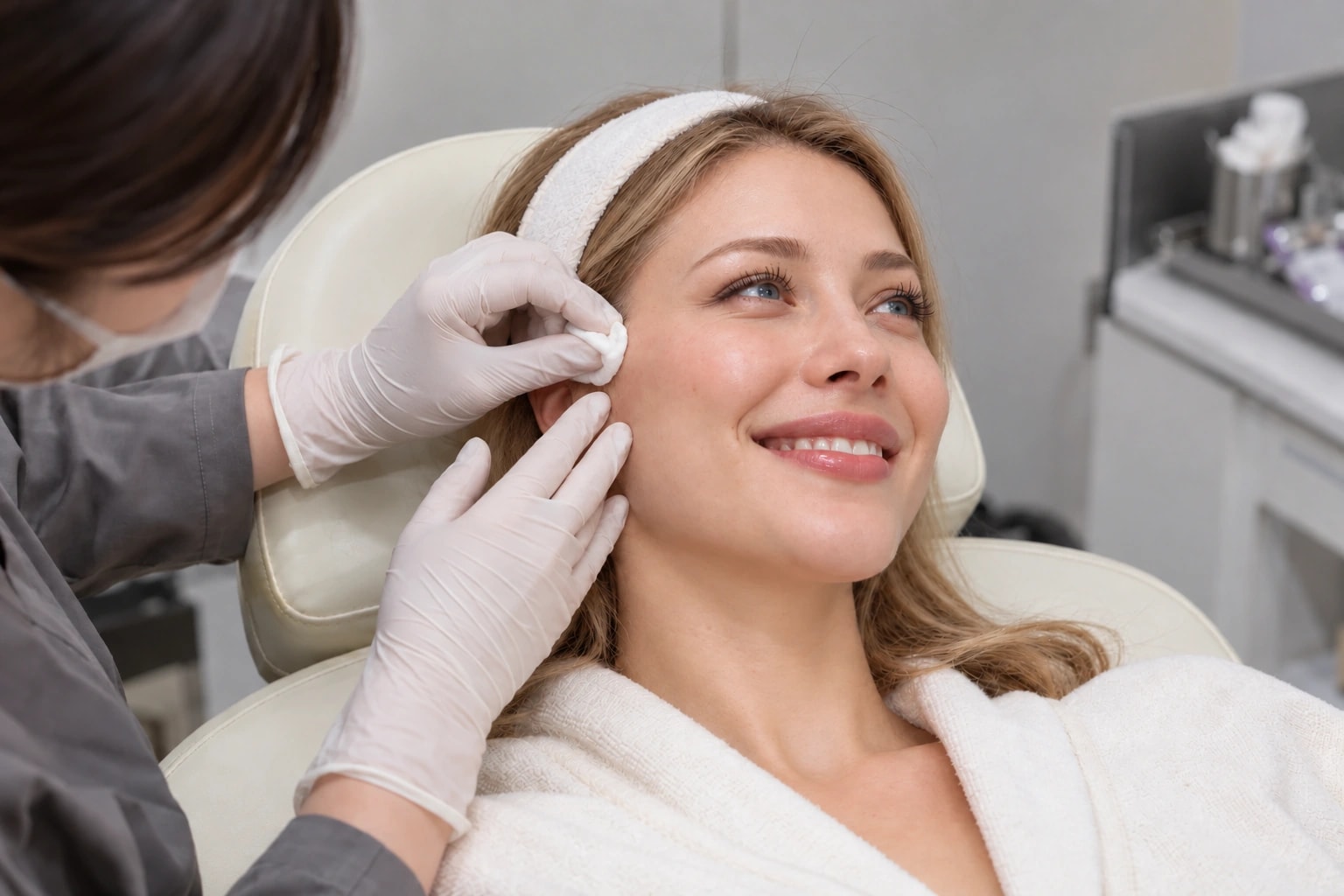
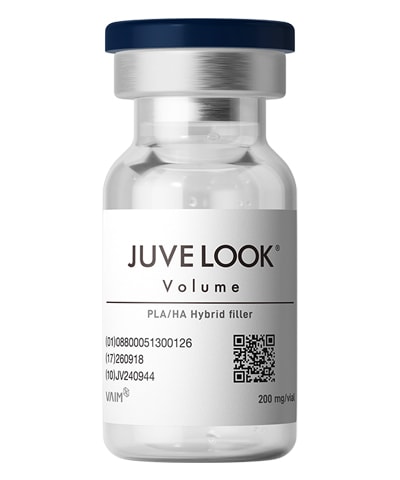
Juvelook Volume uses larger PDLLA microparticles than Juvelook Skin, placed in the deep dermis or subdermal layer for subtle structure and a mild lifting effect where fullness has softened. At QD Clinic in Gangnam, Seoul, South Korea, it is often chosen for the cheeks, temples and nasolabial folds. A session usually takes about 20–40 minutes including numbing. (Results vary by individual.)
Who it’s for
- Cheeks or temples that have lost some fullness
- Softened nasolabial folds where subtle support helps
- Those who want structure and skin quality together, developing gradually
- People who prefer a collagen-stimulating approach over a traditional filler
Whether Volume or another approach suits the area is confirmed during consultation.
How it works
Juvelook Volume uses larger PDLLA microparticles than Juvelook Skin, placed in the deep dermis or subdermal layer. The hyaluronic acid gives an immediate softening effect, while the larger PDLLA particles are thought to prompt firmer collagen support over the following months, giving subtle structure and a mild lifting effect. Because it works gradually through collagen rather than only filling space, it differs from traditional hyaluronic-acid fillers; the two can be discussed together at consultation.
THE MECHANISM, STEP BY STEP
01Larger PDLLA particles, placed deeper
Juvelook Volume uses larger PDLLA microparticles than Juvelook Skin, placed in the deep dermis or subdermal layer.
02Softening now, structure over time
The hyaluronic acid gives an immediate softening effect, while the larger PDLLA particles are thought to prompt firmer collagen support over the following months.
03Structure through collagen, not only filling
Because it builds subtle structure through gradual collagen rather than only filling space, it differs from a traditional hyaluronic-acid filler.
04Why change is gradual
The lifting effect is subtle and develops over the months after treatment as collagen support builds, rather than at once. (Results vary by individual.)
Treatment areas
- Cheeks (mid-face)
- Where fullness has softened over time.
- Temples
- Hollowing at the temples, for subtle support.
- Nasolabial folds
- Softened smile-line area, decided at consultation.
What the procedure is like
- 1Consultation and assessment of the area
- 2Cleansing and numbing cream
- 3Injections in the deep dermis or subdermal layer
- 4Cooling, soothing and aftercare guidance
Time: A session takes about 20–40 minutes, including numbing time.
Recovery & aftercare
- Little downtime; small bumps or firmness at the injection sites may appear and usually settle within about 1–2 days.
- Temporary redness, mild swelling, tenderness or minor bruising may occur.
- Avoid makeup, saunas and intense exercise briefly, use sun protection, and follow the guidance we provide.
What to expect over time
A general guide to how the days and months after treatment usually unfold. Results vary by individual.
DAY 0 Treatment day
Numbing first, then injections in the deep dermis or subdermal layer. Small bumps or a firm feeling at the injection sites may appear, with mild redness or swelling.
DAY 1-2 Settling
The small bumps or firmness usually settle within about 1–2 days. Minor bruising, if any, starts to fade.
WEEK 2-4 Between sessions
Sessions are usually spaced about 4 weeks apart. Any early softening effect varies between people.
OVER THE FOLLOWING MONTHS Structure builds
As collagen support builds, subtle structure and a mild lifting effect may develop gradually. (Results vary by individual.)
AFTER THE COURSE Review & maintenance
Your doctor reviews the outcome and discusses maintenance timing based on your skin.
Sessions & results
A typical plan is about 2–3 sessions spaced roughly 4 weeks apart, with structural changes developing gradually over the following months as collagen support builds. Maintenance is considered after a period decided at consultation. (Results vary by individual.)
How it compares
These all add support or volume to the face, but they differ in how — from gradual collagen to immediate filling — so the right one depends on your goal.
| Comparison | Juvelook Volume | Juvelook Skin | Hyaluronic-acid filler |
|---|---|---|---|
| Main agent | Larger PDLLA microparticles + HA | Fine PDLLA microparticles + HA | Hyaluronic-acid filler |
| How it works | Builds subtle structure through collagen | Refines texture and glow near the surface | Adds volume by filling space directly |
| Often chosen for | Softened cheeks, temples, folds | Texture, pores and radiance | Defined volume or contour |
| Sessions | Usually 2–3 | Usually 2–3 | Often a single placement, refined as needed |
| Downtime | Little; small bumps possible | Little; small papules possible | Little; swelling or bruising possible |
Neither is “better” — they work differently and suit different goals. The right choice is decided after we assess your skin.
Safety & considerations
Possible reactions
- Small bumps or a firm feeling at the injection sites, usually settling within about 1–2 days
- Temporary redness, mild swelling or a flushed feeling
- Tenderness in the treated area for a short time
- Occasionally minor bruising at injection points
When to take extra care
- Pregnancy or breastfeeding — let us know at consultation
- Active skin infection, inflammation or open lesions in the treatment area
- Known allergy or hypersensitivity to any component of the product
- A history of keloid, granuloma formation or difficulty with wound healing
- Recent fillers, injectables or energy treatments in the area — tell your doctor so timing can be planned
Whether Juvelook Volume suits the area is confirmed during consultation, and any volume effect is subtle and gradual. Effects vary by individual, and side effects may occur.
Your care at QD Clinic
Performed by a board-certified doctor
Your treatment is performed and medically reviewed by a board-certified doctor, not delegated unsupervised.
A collagen-stimulating approach
We use Juvelook Volume, which supports subtle structure through gradual collagen rather than only filling space, alongside the wider Juvelook range.
Care in your language
Consultation in English, with 中文 and 日本語 support arranged on request — including questions before you travel.
A short walk from Gangnam Station
Central Seoul location with guidance from the airport and nearby hotels, and hours shown in KST.
Frequently asked questions
Juvelook Volume is used for subtle structure and a mild lift where fullness has softened, most often in the cheeks, temples and nasolabial folds. It uses larger PDLLA particles than Juvelook Skin, placed in the deep dermis or subdermal layer. The change builds gradually over the following months as collagen support develops, so it suits people who prefer a gradual result.
It is not a traditional hyaluronic-acid filler. The hyaluronic acid in it gives an immediate softening effect, but the larger PDLLA particles are thought to prompt collagen support over the following months, and that is where the structure comes from. Because it works gradually rather than only filling space, it is sometimes discussed alongside an HA filler depending on the area.
Juvelook Volume places larger particles deeper to give structure and a mild lift where an area has sunken, while Juvelook Skin places finer particles closer to the surface to work on texture and glow. Even though they belong to the same family, the depth and the goal differ, so one cannot really stand in for the other. When a loss of volume and a texture concern exist together, we sometimes plan the two separately.
The structural change develops over the following months as collagen support builds, and how long it holds varies with the area and the person. Because it does not appear all at once, we review the result after the course rather than right after a session. When to consider maintenance is decided at that review.
Most plans involve two to three sessions, about four weeks apart. Building the volume in stages is safer than trying to reach the full result at once, because the collagen response takes time to show. After the course we compare the change with your original aim and decide on maintenance.
Straight after the treatment the area does look somewhat fuller because of the hyaluronic acid, but that is not the final result. The real volume builds over two to three months as PDLLA stimulates collagen production. Trying to reach the full result in a single session makes overcorrection likely, so we plan it in stages.
We first check whether assessment and any necessary follow-up fit your stay. Share your arrival, departure and important event dates before booking. For this treatment, the expected course is as follows. A typical plan is about 2–3 sessions spaced roughly 4 weeks apart, with structural changes developing gradually over the following months as collagen support builds. Maintenance is considered after a period decided at consultation. (Results vary by individual.) Temporary redness, mild swelling, tenderness or minor bruising may occur. Avoid makeup, saunas and intense exercise briefly, use sun protection, and follow the guidance we provide. Examination may lead to postponement or additional visits. Confirm contact arrangements after returning home and when in-person medical care may be needed. What the doctor checks first for this treatment: “Areas where hollowing and skin elasticity have to be considered together”.
Often considered together
Treatments that are sometimes planned alongside this one, decided at consultation.
+Hyaluronic-acid filler
For areas needing immediate volume, a traditional HA filler fills space directly, which differs from Volume’s gradual collagen support — the two can be discussed together at consultation.
+Ultrasound or RF lifting
Energy-based lifting addresses laxity, adding firmness alongside the subtle structure Volume supports. Sequencing is decided by your doctor.
+Juvelook Skin
For overall texture and glow across the face, the finer-particle Skin type addresses skin quality that Volume does not focus on — often planned together.
For international patients
Consultation in English / 中文 / 日本語 · WhatsApp · WeChat · KakaoTalk · a 4-minute walk from Sinnonhyeon / Nonhyeon Station (hours in KST).
How many days should I stay?
Surgery and course-based treatments need a check-up. We tell you before you book whether that means staying longer or coming back another time.
For International Patients