
Fraxel Full Face
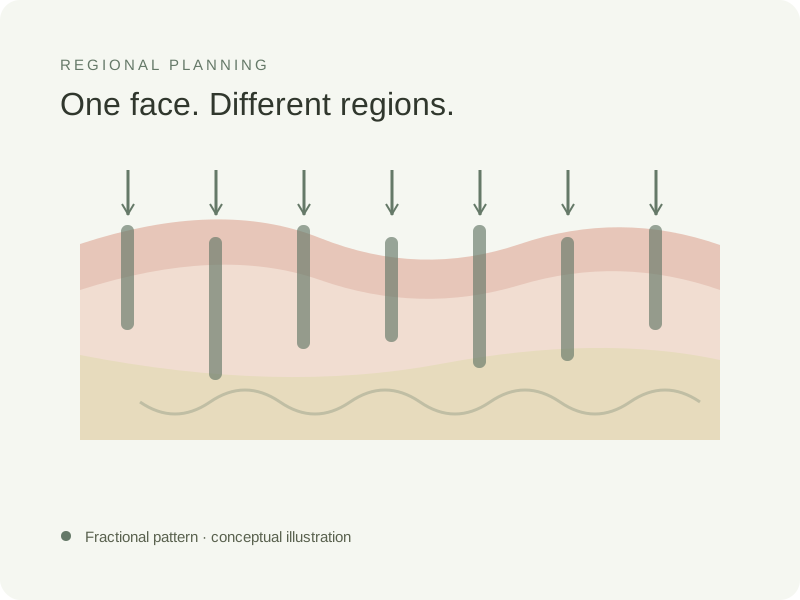
Fraxel Full Face evaluates uneven texture and shallow acne scars distributed across several facial regions. Thickness, scar type and sensitivity can vary within one face, so treatment coverage is planned region by region.

Who it’s for
- Texture concerns spread across the cheeks and forehead
- A need to assess several facial regions during one visit
- Time available to plan aftercare for a wider treated surface
Full face does not mean every patch receives identical treatment. Eyelids, lips and damaged skin require separate decisions; the neck is not automatically included.
How it works
Laser energy is distributed into microscopic treatment points rather than applied uniformly to the whole surface. The distribution of scars guides regional coverage and density, followed by observation of healing.
THE MECHANISM, STEP BY STEP
01Map the face
Record how texture and scar patterns differ across the forehead, cheeks and chin.
02Plan by region
Avoid applying one setting automatically to thin and sensitive areas.
03Deliver fractionally
Treat selected regions while observing the skin response.
04Plan wider aftercare
Coordinate cleansing, moisture and sun protection across the treated face.
Treatment areas
- Forehead
- Assess thinner skin and any existing irritation.
- Both cheeks
- Identify the different patterns of uneven texture and depressed scars.
- Chin region
- Separate active breakouts from old scars before deciding coverage.
What the procedure is like
- 1Use examination and regional photographs to agree treatment targets and exclusions.
- 2Prepare anaesthesia and protective eyewear, then follow the plan for each area.
- 3Complete cryo care and a sheet mask, and explain home care and contact criteria.
Allow for preparation, treatment and soothing care. Confirm the full visit length before scheduling a major event or travel connection.
Recovery & aftercare
- Redness and swelling may settle at different speeds across the face.
- Restart makeup and shaving according to surface healing; adjust sauna use and strenuous exercise as advised.
- Do not pull off flakes. Plan moisturising and sun protection around outdoor activities.
What to expect over time
A general guide to how the days and months after treatment usually unfold. Results vary by individual.
Initial response
Observe regional differences in swelling, redness and heat.
Surface recovery
Review dryness and roughness while limiting irritating skincare.
Progress review
Compare regional photographs after swelling settles to assess remaining texture concerns.
Sessions & results
Treating several areas does not mean all scars respond equally. Session numbers and spacing depend on healing, and persistent deep scars may require a different treatment strategy.
How it compares
Full-face planning assesses concerns spread across several areas. Butterfly-zone coverage is concentrated around the nose; the distinction is the treatment area, not simply a stronger or weaker setting.
| Comparison | Fraxel Full Face | Fraxel Butterfly Zone |
|---|---|---|
| Coverage | Individual plans for several facial regions | Focused coverage beside the nose |
Safety & considerations
Possible reactions
- Redness, swelling, dryness and sensitivity over a wider area
- Darkening or lightening of skin, infection, burns, delayed healing or scars
Discuss before treatment
- Recent tanning or sunburn and pigmentation conditions
- Cold sores, keloid history, medicines and reactions to earlier laser procedures
Healing can vary across the face. Tell the clinic promptly about worsening pain, blisters, discharge or unexpected changes.
Your care at QD Clinic
Record regional targets
Agree areas to prioritise and areas to leave untreated.
Adjust the plan
Account for sensitivity differences and avoid unnecessary overlap.
Compare the whole face
Review the forehead, cheeks and chin separately in matching photographs.
Frequently asked questions
The name alone does not establish coverage of those areas. Eye regions require separate protection and assessment; confirm the included facial zones and exclusions during consultation. Planning centres on regions where texture changes and scars are spread, such as the forehead, both cheeks and the chin, while lips and damaged skin are judged separately.
Planning also considers skin thickness, inflammation and pigment response. Settings may differ by region, and deeper or tethered scars may need another approach. Thin forehead skin does not automatically receive the same setting as widespread scarring on the cheeks, and active breakouts around the chin are separated from old scars before coverage is decided.
Early swelling can temporarily make depressions less visible. Comparison under consistent lighting after redness and swelling settle gives a more meaningful assessment. Because each region may settle at a different speed, the forehead, cheeks and chin are reviewed separately in matching photographs.
Sessions should not be compressed before the skin has recovered. Schedule reassessment according to healing and arrange aftercare and a contact plan for after departure. If your itinerary includes a lot of time outdoors, plan moisturising and sun protection around it as well.
This page focuses on surface texture and scar distribution. Tissue sagging or changes in facial volume require a separate assessment and may lead to a lifting consultation. Fractional laser divides energy into microscopic treatment points to address texture and shallow scars; it is not a treatment for lifting sagging tissue.
For international patients
Consultation in English / 中文 / 日本語 · WhatsApp · WeChat · KakaoTalk · a 4-minute walk from Sinnonhyeon / Nonhyeon Station (hours in KST).
How many days should I stay?
Surgery and course-based treatments need a check-up. We tell you before you book whether that means staying longer or coming back another time.
For International Patients