
Nasolabial Fold Fat Grafting
Hollowing and skin folding between the nostril and mouth are assessed separately. The plan considers volume support, facial movement and descent of the midface.

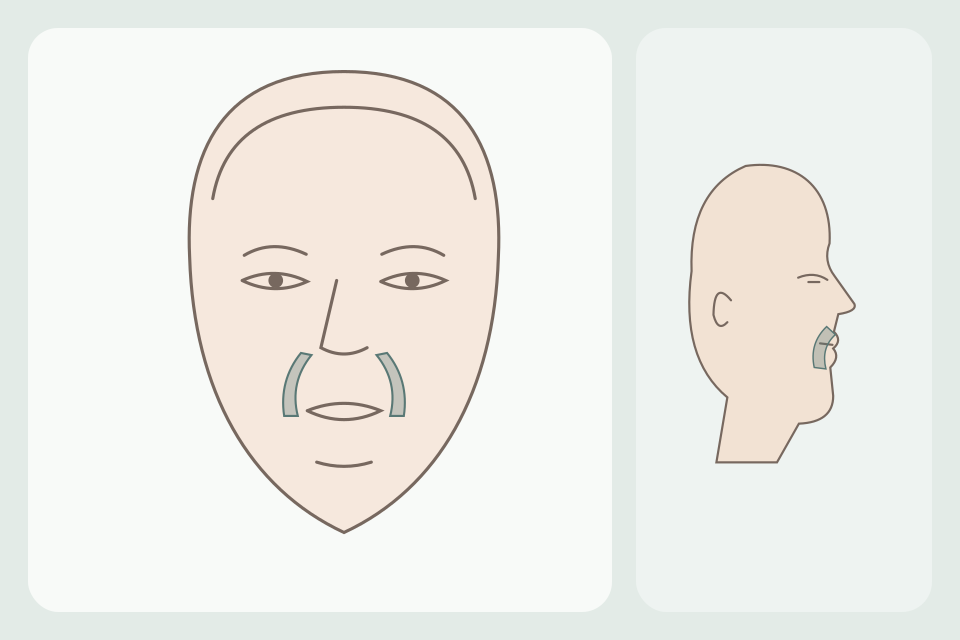

Who it’s for
- People seeking assessment of a local hollow that may reflect soft-tissue volume loss
- People able to plan recovery and follow-up for both the face and donor area
- People who understand partial absorption, asymmetry and the possibility of further correction
The fold reflects skin movement, bone support and tissue descent as well as volume. Filling along a line cannot remove every crease or lift the cheek.
How it works
Hollowing and skin folding between the nostril and mouth are assessed separately. The plan considers volume support, facial movement and descent of the midface. Autologous fat grafting transfers prepared fat from a donor area, such as the abdomen or thighs, to supplement soft-tissue volume. The graft needs to establish a blood supply, and some fat may be absorbed. Retention and contour vary; a fixed survival rate or permanently unchanged shape cannot be promised. The fold reflects skin movement, bone support and tissue descent as well as volume. Filling along a line cannot remove every crease or lift the cheek.
THE MECHANISM, STEP BY STEP
01Area and cause
Support beside the nostril, groove depth and cheek descent are examined. Smiling, speaking and previous filler or nasal-area operations inform planning.
02Harvest and preparation
The surgeon assesses donor fat and skin, then plans anaesthesia and harvesting. The harvested fat is prepared, and wound care and recovery at the donor site are explained alongside facial recovery.
03Placement and review
Placement is distributed according to tissue thickness and local vascular and nerve anatomy. Excessive filling in one session is avoided, and any further correction is considered after swelling and absorption have been reviewed.
Treatment areas
- Nasolabial folds
- Support beside the nostril, groove depth and cheek descent are examined. Smiling, speaking and previous filler or nasal-area operations inform planning.
What the procedure is like
- 1Support beside the nostril, groove depth and cheek descent are examined. Smiling, speaking and previous filler or nasal-area operations inform planning.
- 2The surgeon assesses donor fat and skin, then plans anaesthesia and harvesting. The harvested fat is prepared, and wound care and recovery at the donor site are explained alongside facial recovery.
- 3Placement is distributed according to tissue thickness and local vascular and nerve anatomy. Excessive filling in one session is avoided, and any further correction is considered after swelling and absorption have been reviewed.
Anaesthesia and duration are planned after assessment of the recipient areas, donor site and health. Arrange transport home and early follow-up before surgery.
Recovery & aftercare
- Speaking and smiling may feel tight while swelling settles. Discuss dental appointments and pressure-based massage in advance, and report worsening pain or skin-colour changes promptly.
- Avoid firm pressure or rubbing over the graft. Follow individual advice on washing, sleep position and exercise, and check whether donor-site dressings or compression are needed.
What to expect over time
A general guide to how the days and months after treatment usually unfold. Results vary by individual.
Early care
Avoid firm pressure or rubbing over the graft. Follow individual advice on washing, sleep position and exercise, and check whether donor-site dressings or compression are needed.
Follow-up
Facial swelling, colour and texture are reviewed together with donor-site wounds. Early asymmetry is not automatically the final outcome, but sudden pain or colour change must not wait.
Contour assessment
Volume is reassessed with photographs and examination over the months in which swelling and absorption settle. Remaining hollows and tissue condition guide whether and when another graft is appropriate.
Sessions & results
Speaking and smiling may feel tight while swelling settles. Discuss dental appointments and pressure-based massage in advance, and report worsening pain or skin-colour changes promptly. Volume is reassessed with photographs and examination over the months in which swelling and absorption settle. Remaining hollows and tissue condition guide whether and when another graft is appropriate.
How it compares
The fold reflects skin movement, bone support and tissue descent as well as volume. Filling along a line cannot remove every crease or lift the cheek.
| Comparison | Nasolabial Fold Fat Grafting | Hyaluronic acid filler |
|---|---|---|
| Scope and limitations | Autologous fat grafting transfers prepared fat from a donor area, such as the abdomen or thighs, to supplement soft-tissue volume. The graft needs to establish a blood supply, and some fat may be absorbed. Retention and contour vary; a fixed survival rate or permanently unchanged shape cannot be promised. | A manufactured gel adds local volume without fat harvesting. Suitability and duration depend on the product and area, and vascular complications remain possible. Equivalent amounts or recovery cannot be assumed. |
Safety & considerations
Possible complications
- Swelling, bruising, pain, bleeding, infection, scarring or altered sensation can affect the face and donor area.
- Absorption, asymmetry, overcorrection, undercorrection, irregularity, nodules, fat necrosis or oil cysts may occur.
- Rare vascular complications can cause skin injury, visual loss or neurological injury; anatomical assessment is essential.
Before surgery
- Describe previous fillers, fat transfer, implants and facial operations, including dates, locations and materials.
- Report medicines, supplements, allergies, bleeding conditions, smoking and recent weight changes; do not stop prescribed medicine yourself.
Sudden visual changes, severe pain, pale or dark skin, difficulty speaking or limb weakness require emergency assessment. Rapidly increasing swelling, fever or discharge also need prompt medical review.
Your care at QD Clinic
Area and cause
Support beside the nostril, groove depth and cheek descent are examined. Smiling, speaking and previous filler or nasal-area operations inform planning.
Harvest and preparation
The surgeon assesses donor fat and skin, then plans anaesthesia and harvesting. The harvested fat is prepared, and wound care and recovery at the donor site are explained alongside facial recovery.
Placement and review
Placement is distributed according to tissue thickness and local vascular and nerve anatomy. Excessive filling in one session is avoided, and any further correction is considered after swelling and absorption have been reviewed.
Frequently asked questions
A nasolabial fold combines skin folding, cheek descent, skeletal support and volume. Fat may supplement a hollow base while a crease remains during expression. The area beside the nostril is assessed separately from the lower part of the groove. Excess filling to erase every line can make the mouth area look heavy.
Grafting adds volume, while lifting addresses the position of descended tissue. A cheek hanging over the fold differs from a genuinely hollow supporting area. Skin elasticity, midface support and changes during smiling guide the main goal. Combining treatments is considered only when each has a clear reason and acceptable recovery burden.
Tell the team about appointments involving prolonged mouth opening or facial pressure. Dental or gum infection and open oral wounds also need to be discussed. The type of treatment and healing status may affect the order of appointments and surgery. Timing should follow the treating clinicians’ advice rather than one fixed interval for everyone.
Ordinary expression alone does not establish what the final result will be. Early swelling can change the apparent shape, and firm massage or repeated pressure should be avoided. Persistent pulling or asymmetry during expression needs review of movement and tissue texture. Do not press the area into shape; describe when the change began to the treating team.
For international patients
Consultation in English / 中文 / 日本語 · WhatsApp · WeChat · KakaoTalk · a 4-minute walk from Sinnonhyeon / Nonhyeon Station (hours in KST).
How many days should I stay?
Surgery and course-based treatments need a check-up. We tell you before you book whether that means staying longer or coming back another time.
For International Patients